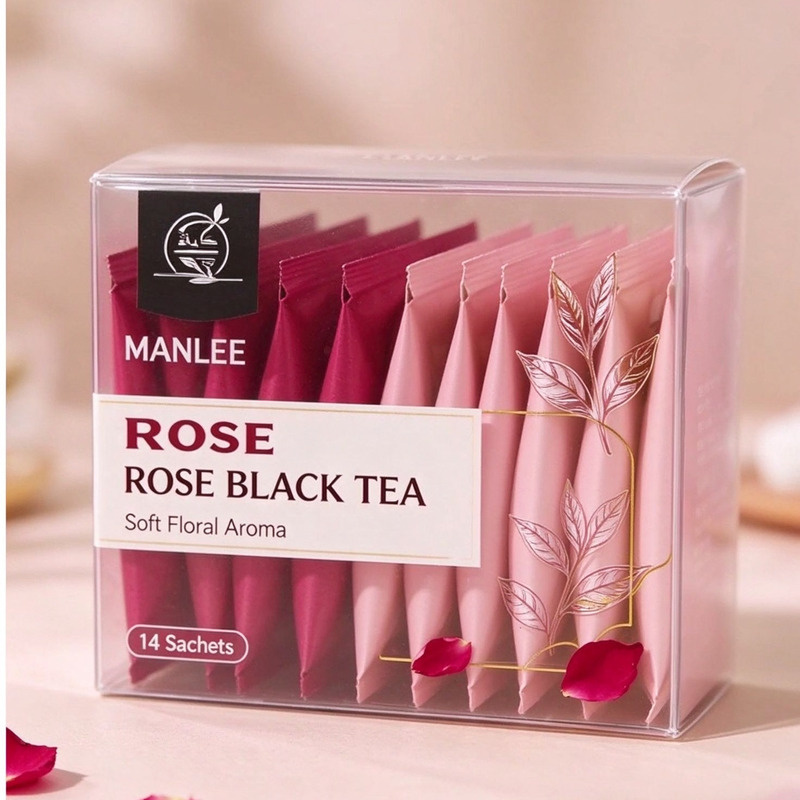
Walk down any tea aisle in the US and the shift is obvious: brands are moving away from sealed cartons that hide the product, toward packaging that lets shoppers see what they are buying. Clear folding tuck top boxes do exactly that — and for tea, where sachet design, color and perceived freshness carry much of the purchase decision, that visibility is worth more than a printed panel. Here is what tea brands and retail buyers should weigh when choosing this format, and how the production side works in practice.
1. Visibility is the product advantage
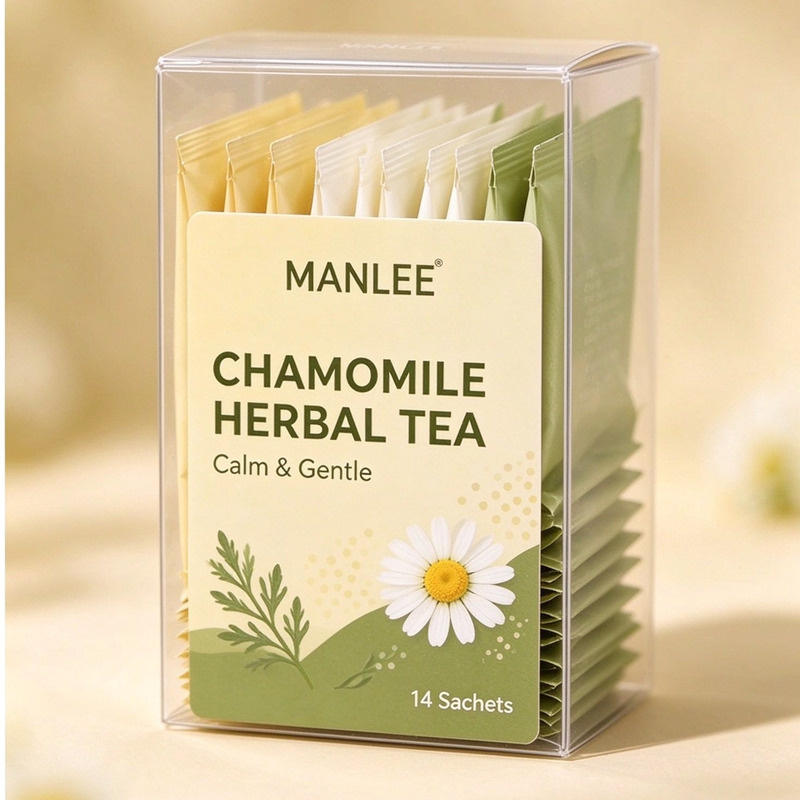
A clear PET box shows the sachets themselves: the printed pouch, the color coding between flavors, the count. Shoppers can judge freshness and format before reading a word of copy.
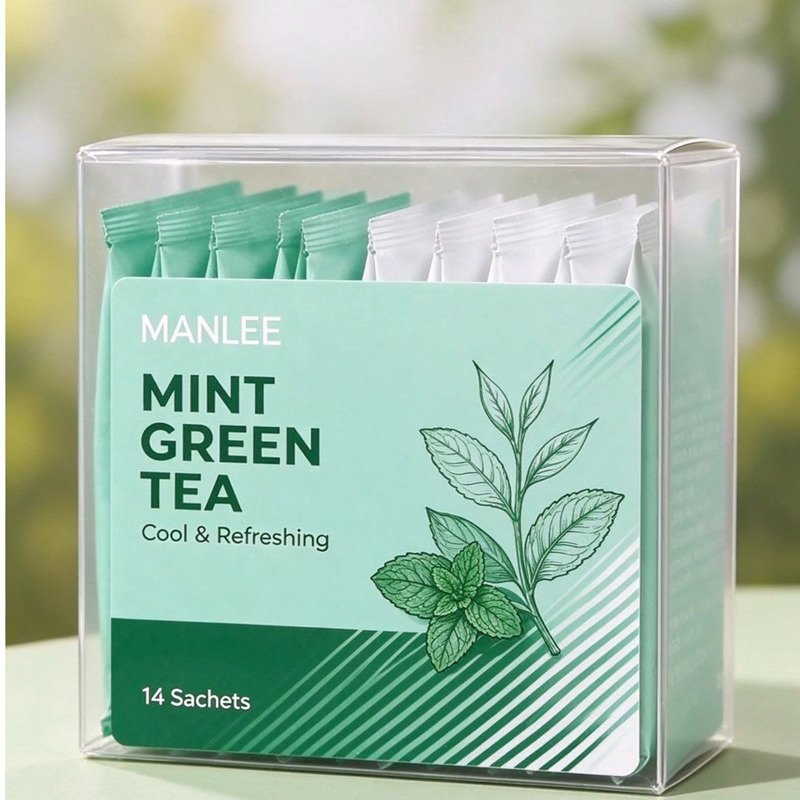
For multi-flavor lines, this matters even more. One box structure, eight flavor insert cards, one consistent shelf presence. The packaging system stays the same while the flavor story changes — cheaper to produce, easier to merchandise.
2. It ships flat, which changes your freight math
Tuck-top clear boxes ship as flat blanks and are folded at destination. Compared with pre-assembled rigid boxes, that removes most of the air from the carton — a measurable saving on ocean freight and warehouse space, and it matters most on high-volume programs.
Assembly takes seconds per unit and needs no glue or special tooling, so contract packers and in-house teams can absorb it into an existing line without new equipment.
3. Customization is where the value sits
Off-the-shelf clear boxes rarely fit a sachet program exactly. What tea brands actually need:
Size matched to your sachet count and sleeve layout, not forced into a stock dimension
Sheet thickness selected for the rigidity your retail channel requires — balanced against box weight and cost
Full-color printing on the box and insert card, aligned to your brand system
Artwork support: supply ready files, or hand over a rough concept and have the layout prepared for you at no additional cost
For buyers who do not have a designer on staff, that last point is often the deciding factor.
4. Sampling and lead time decide who wins the program
Most US tea programs run on a fixed retail calendar. A supplier who cannot turn a sample quickly is a risk to that calendar.
Our standard flow: custom samples within 5 days, bulk production in 8–15 days after sample approval. That keeps a new flavor launch or a packaging refresh inside a normal retail timeline instead of pushing it a quarter.
5. Landed cost, not unit price, is the real number
A low unit price with complicated import handling is not a low cost. We ship DDP door-to-door to the United States: freight, customs clearance and final delivery are arranged for you, and the goods arrive at your warehouse address.
For buyers comparing quotes from three suppliers, this is the difference between a number and a delivered cost you can actually plan a margin against.
6. What to send us for a quote
To price a Clear Plastic Tea Box Packaging accurately, we need:
Box dimensions, or the sachet size and count you plan to pack
Target sheet thickness, if you have a preference
Artwork files, or a description of the design direction
Estimated annual or per-order volume
Delivery city or warehouse in the US
Send those five items and you get a proposal with sample timing and a delivered cost, not a ballpark.

Please read on, stay posted, subscribe, and we welcome you to tell us what you think.


 IPv6 network supported